
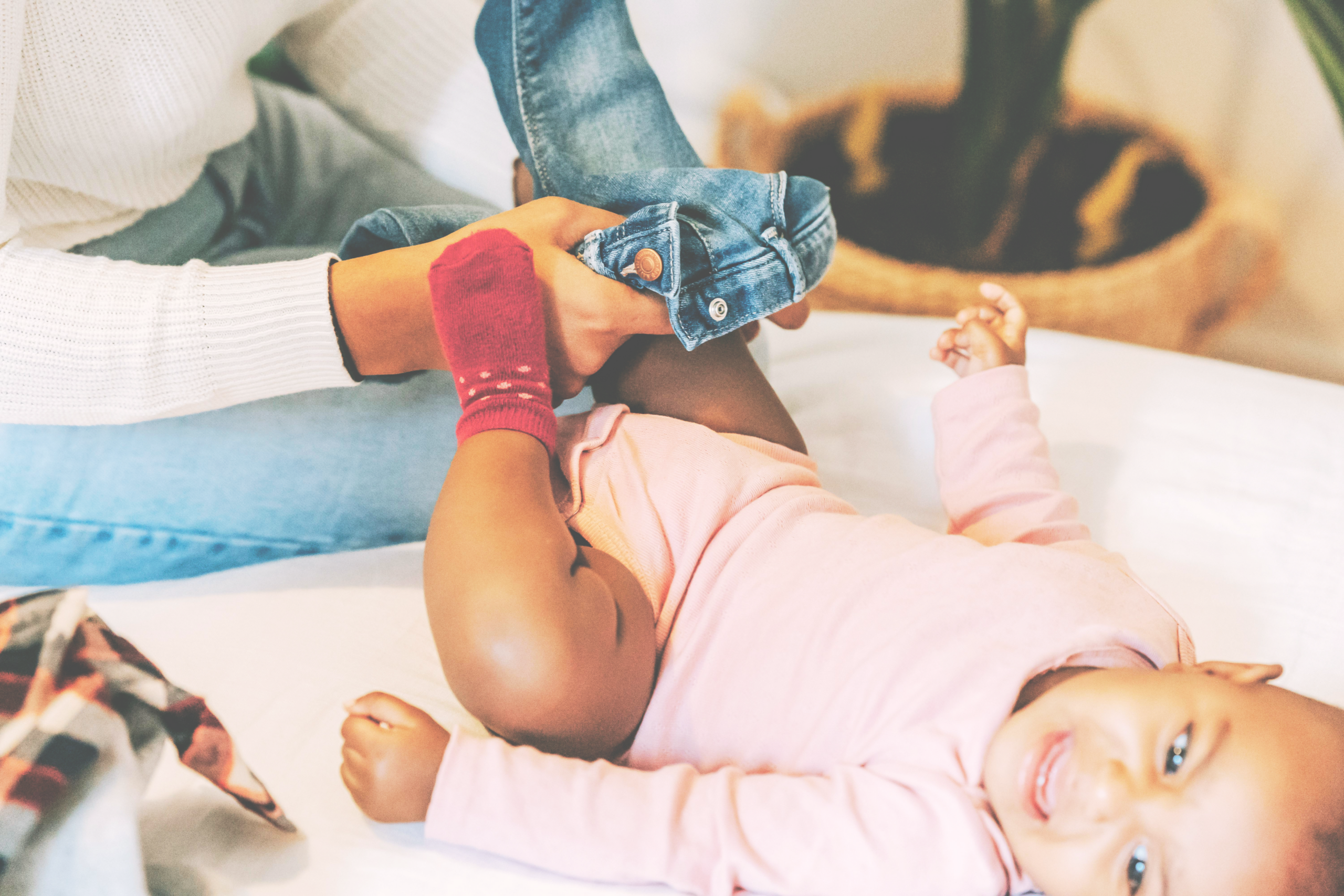
There are many dressing skills that children need to meet within dressing milestones. These come from basic everyday curious moments our children have. Providing ample opportunities for diverse movements and coordination practice will improve toddlers ability to dress themselves.

Dressing skills
Dressing skills start with body awareness. Well before your child attempts to put a shirt on themselves they need to gain awareness of self. Dressing skills by age 1 can include removing socks. This movement includes pincer grasp, intentional movements of legs and feet, and importantly the knowledge there are socks on their feet. During this period your child will also begin to push their arms through the sleeve of a shirt.
Fine motor skills and coordination are an important part of moving to more advanced dressing skills. Dressing skills by age 2 can include fine motor skills as well as balance which will include pinching and pulling pants while staying upright in a seated position. Toddlers are increasing their awareness of their body, movements, and gaining strength. Providing many ways for your toddler to manipulate their bodies to gain strength and coordination will increase their ability for self dressing. Backward chaining is a good method to teach skills at this stage. With this method you will complete all but the final step as the child increases their ability to complete more of the process.
Dressing activities for 3 4 year olds
By the time our children are 3 they are beginning to self dress and can have a wide range of abilities and met dressing milestones. Quiet Books or Montessori Dressing Frames are a good way for preschool age children to practice tricky fine motor skills. These activities will include buttons, lacing, and zippers.
Provide opportunities to determine right from left shoes.

Dressing skills milestones
- Undressing
- Socks – Generally the first item to be undressed and many socks will go missing!
- Hats – Removing hats is a close second. This can get very frustrating during winter months.
- Shirts – Removing shirts can be a complicated process. Be as consistent as possible when assisting so the child can mimic the process.
- Pants – Pulling down pants is an important step of the toilet training process.
- Underwear – Typically by the time they are wearing underwear they have already mastered removing their pants. Often this skill is easier to grasp as they have already built a like skill.
- shoes – Removing shoes can go right along with moving socks.
- Dressing
- Socks – It takes practice to put socks on so the heel is on the bottom.
- Underwear-
- Shirts – The first step learned when putting on the shirt you will see is pushing an arm through while dressing your toddler.
- Pants –
- Jackets – The jacket flip is a process which many toddlers use to learn to put on jackets. Lay jacket on the ground with head towards feet. When you put your hands through the sleeves flip the jacket overhead.
- Shoes – There are so many challenges with shoes! Between choosing the right foot, laces, and holding the tongue.
- Hats – Hats can be fun to practice with. This is a good step to learning where head is in relation to body to assist with other dressing skills.
- Fasteners
- Buttons – Practicing buttons can start with putting a coin into a slot. Then progressing to large then small buttons.
- Snaps – Having a strong pincher grasp takes a lot of work! When they figure it out snaps are a great option.
- Velcro – This fastener is easy to learn and provides quick wins.
- Lacing –
- Tying – Shoe tying is so tricky! This is a skill to use Back Chaining on. Always talk through the whole process then let them complete the final step. When they have a hang of that add the prior step.
- Belts – Weaving? Pulling? The most complicated part is not being able to see clearly. Practice first where the buckle is clearly visible.